In most California families I've seen go through the permit process, the driving log itself becomes a low-grade source of friction. Parents want to verify the hours are real. Teens want credit for every drive. Neither side wants to have a fight about it the night before the road test.
This guide is about how to keep a supervised driving log that both parents and teens can trust, and what specifically goes wrong when there's no shared system.
The shared-record problem
The California DMV requires a parent or guardian to certify, via the DL 400 form, that the teen has completed 50 supervised driving hours including 10 at night. The DMV doesn't read your log. The parent signs the statement.
That puts the parent in an interesting position. They are legally certifying hours they often did not personally watch every minute of. They have to trust the count. And if there's no shared record, they're either trusting their teen's memory or recreating the log from scratch a few days before the test.
Most parents are not comfortable with either option. Most teens are not comfortable being doubted. A shared, immediate record — one that both parent and teen can see — removes the argument before it starts.
What to actually track per drive
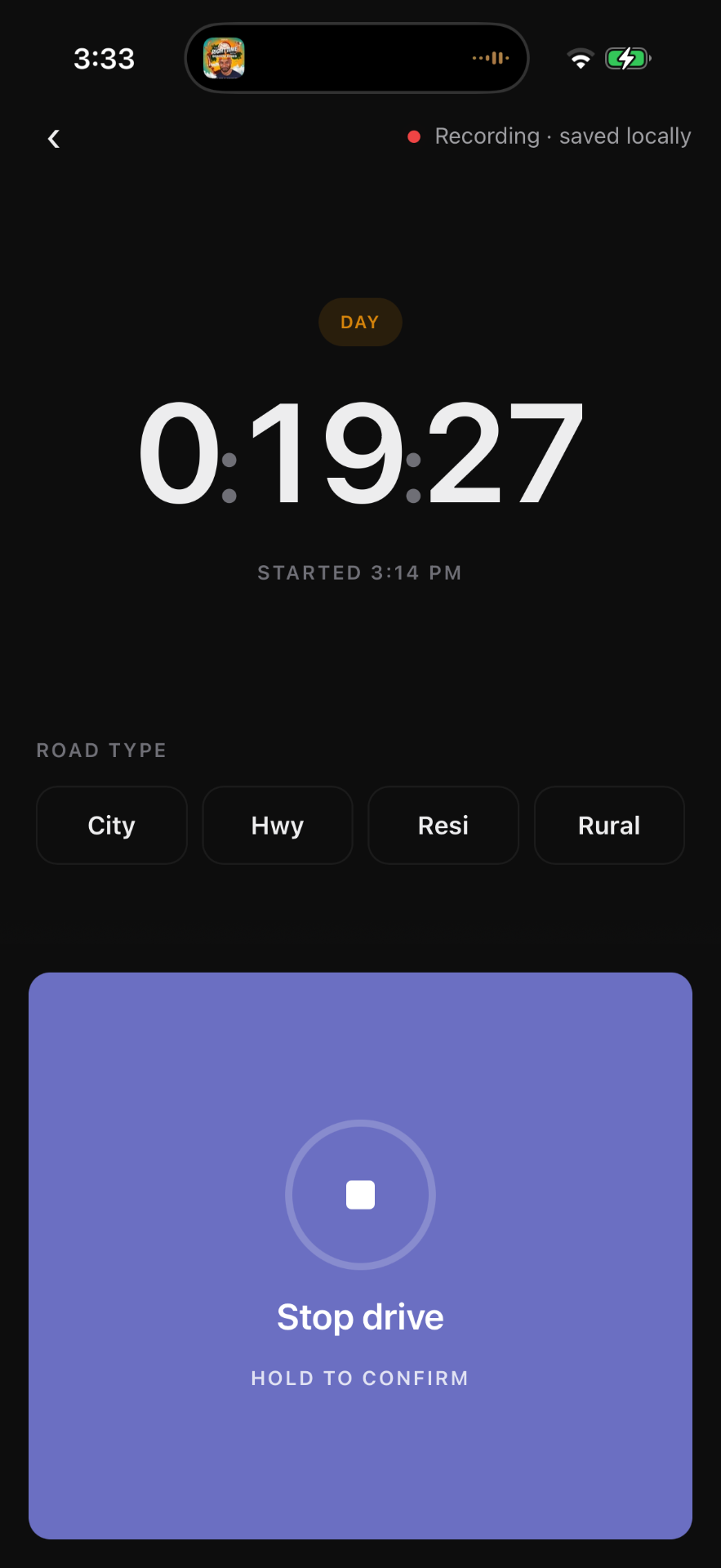
The minimum that's useful: date, start time, duration, whether it was day or night, and a rough road type (residential, highway, rural, city). Anything more than that is usually overkill; anything less misses information you'll want to reference later.
You'll especially want road type if your teen has been heavily concentrated in one environment. A log that shows 47 hours of residential streets and 3 hours of highway is technically compliant but is the kind of thing that gets brought up at the road test.
Where Clocked fits in the parent-teen dynamic
Clocked was built around the idea that the log should be the same record for both sides. Both parent and teen can see the same dashboard showing progress against California's 50-hour and 10-hour-night requirements. Drives are saved on the device first — local-first, before any cloud sync — which means a drive never disappears because of signal loss. And because the app classifies day versus night using your actual local sunset and sunrise, the night-hour count isn't a guess.
For parents, this means the certification on the DL 400 is being signed against a clean record. For teens, it means they get credit for the drives they actually did. For both, it means the conversation a week before the road test is "let me pull up the log" instead of "let me try to remember."
The other reason a digital log matters: refunds and resets
Less obvious but important: if your teen has to retake the road test, or if there's any question later about what was certified, a clean PDF export of the log is something you actually have. Paper logs get lost. Spreadsheet entries get accidentally deleted. A dated, structured digital record sits in your files for as long as you need it.
What to do if you're already partway through
If you're partway through the permit period without a great log, you're not stuck. Most apps that handle supervised driving — including Clocked — support manual entry for past drives. You can add the dates and durations you remember, mark them appropriately, and start logging new drives in real time from this point forward.
The hours you've actually driven are real. The log just needs to catch up.

Internal links: